
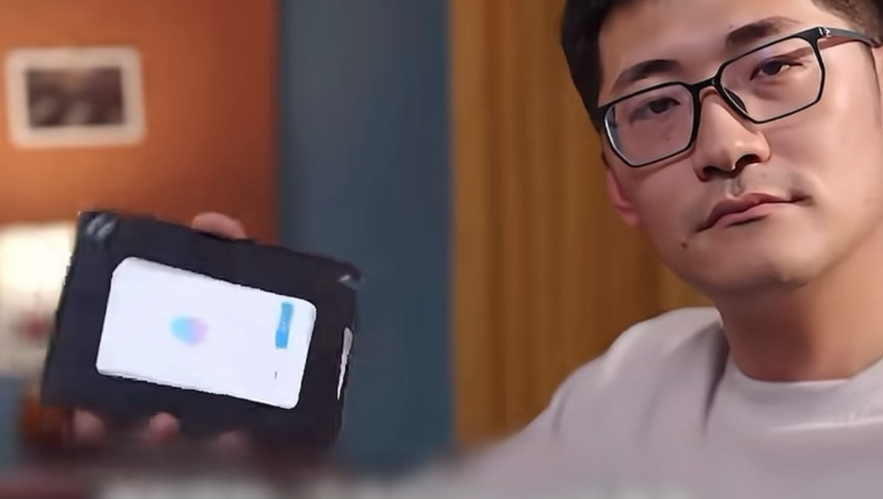
Everyone is still hyping up how quickly software adapted to the iPhone's new widescreen—the results came fast, and the results were visible immediately. Yet the hardware track's pace of adaptation was even faster than the iPhone's. On the very first day the phone arrived in people's hands, many discovered that widescreen adaptation hadn't yet rolled out across the board. But within just a few hours, WeChat had already solved the compatibility problem, with more than 70 apps completing full adaptation in one go. For the foldable screen, developers even came up with lots of new features: music playback got an album-scrolling effect, and when watching TV shows or movies, the bottom of the screen could turn into a trackpad just like on a computer, complete with real-time reflections powered by AI algorithms. Of course, behind all this, Apple's official support was indispensable. To safeguard the user experience, Apple required that apps be adapted to the new form factor and be listed before April next year—if you want to reach Apple users, you have to adapt to this demanding standard, something that was never demanded of other foldable phones. But who would have thought that in the even harder-to-adjust hardware field, charger maker Anker managed to directly match the new iPhone model: plug in the charging cable and it's automatically recognized, with a display screen and touch controls to adjust charging modes. You can even see domestic Chinese brands being listed on the official store alongside Apple's own first-party chargers. No wonder its overseas sales are second only to Apple's. Anker, you really are something else.
iPhone Duo · Original Bilibili video & transcript
Who would have thought the first to deliver the answer sheet would be our homegrown Chinese chargers!
Quick Summary
This video (from creator "Qi Tuo Chi Gua Yi Xian") focuses on the ecosystem adaptation situation following the release of the iPhone Duo (the foldable iPhone). The creator says that on the very first day the iPhone Duo arrived, many people found that widescreen adaptation had not yet become widespread, but just a few hours later WeChat resolved the incompatibility issue, with roughly 70-plus apps achieving adaptive display. New features designed for the foldable screen also emerged, such as an album-scrolling effect during music playback, and the bottom of the screen turning into a trackpad like on a computer while watching shows or movies, plus what the creator describes as a real-time reflection powered by AI algorithms. The creator also mentions that Apple officially requires apps submitted for listing before April next year to support the foldable model, or they cannot be listed. On the hardware side, the creator says charger brand Anke directly matched the new iPhone model: the charging cable is automatically recognized once plugged in, features a display, and allows touch-based adjustment of charging modes; moreover, the domestic brand is now sold on Apple's official website. Based on this, the creator marvels at how outstanding Chinese-made chargers have performed. All of the above is the creator's spoken commentary; the specific figures and brand information have not been verified.
Full Video Transcript
Transcript from the original video by @琪坨吃瓜一线. Automatic recognition may contain errors.